
Priority voucher tension, blood-based Alzheimer's detection, & FDA mini-inspections
No. 10 | May 14, 2026

☕ We crossed 500 readers (just in time for the 10th issue!) and I am very humbled. Thank you for spending a few minutes here each week.
Let’s get into this week’s cup of biotech tea. ☕ If you only have time for one this week, I’d start with #3!
Sanofi shows how a Priority Review Voucher can have pros and cons ➡️
Approach to cancer therapy that targets tumor AND stroma ➡️
Earlier Alzheimer’s diagnosis achievable with blood-based tests ➡️
FDA announces one-day facility inspection pilot program ➡️
An epidemiologist & scicommer talks about hantavirus misinformation ➡️
Bonus (paid): Accelerated Approval Pathway (3rd of FDA expedited program series) ➡️
1. Story I’m Watching
The Tea: Sanofi is pulling an indication expansion of their Type 1 diabetes monocloncal antibody, Tzield, from the National Priority Review process after experiencing political interference.

The Director of the Center for Drug Evaluation and Research (CDER), Dr. Tracy Beth Høeg, appears to be pushing for the rejection of the expedited application, seemingly against the majority view of many career scientists. She is worried the risks outweigh the benefits in the late-stage group, but Sanofi has responded saying that no post-market analysis data from use in patients in previously approved indication groups has shown any causal relationships between serious AEs and the treatment.
Sanofi, pulling out of the Commissioner’s National Priority Review (CNPV) expedited review, doesn’t guarantee a clean approval through the normal review process, but it appears that they are hoping that leaving the spotlight (and taking some time) will result in a more favorable outcome.
A few more sips: Tzield (or Teplizumab) is already approved for early-stage Type 1 diabetes use in ages 1+ years. The application at hand is seeking approval for use in late-stage disease in 8+ years. It was one of the first nine to receive the CNPV voucher, granting a speedy 1 to 2 month review, for “aligning with national priorities”.
The CNPV voucher program has taken a lot of criticism since being announced — mostly for concerns about political interference: are career scientists still leading the decision process? High-level FDA-officials do not typically weigh in, but the high-profile nature of the voucher applications seems to draw their attention. Companies will have to weigh the benefits of the expedited review period against both the optics as well as the risk of interference.

2. From the Bench
The Tea: The Tea: What if the next generation of cancer therapies focuses just as much on the tumor microenvironment as the tumor itself?
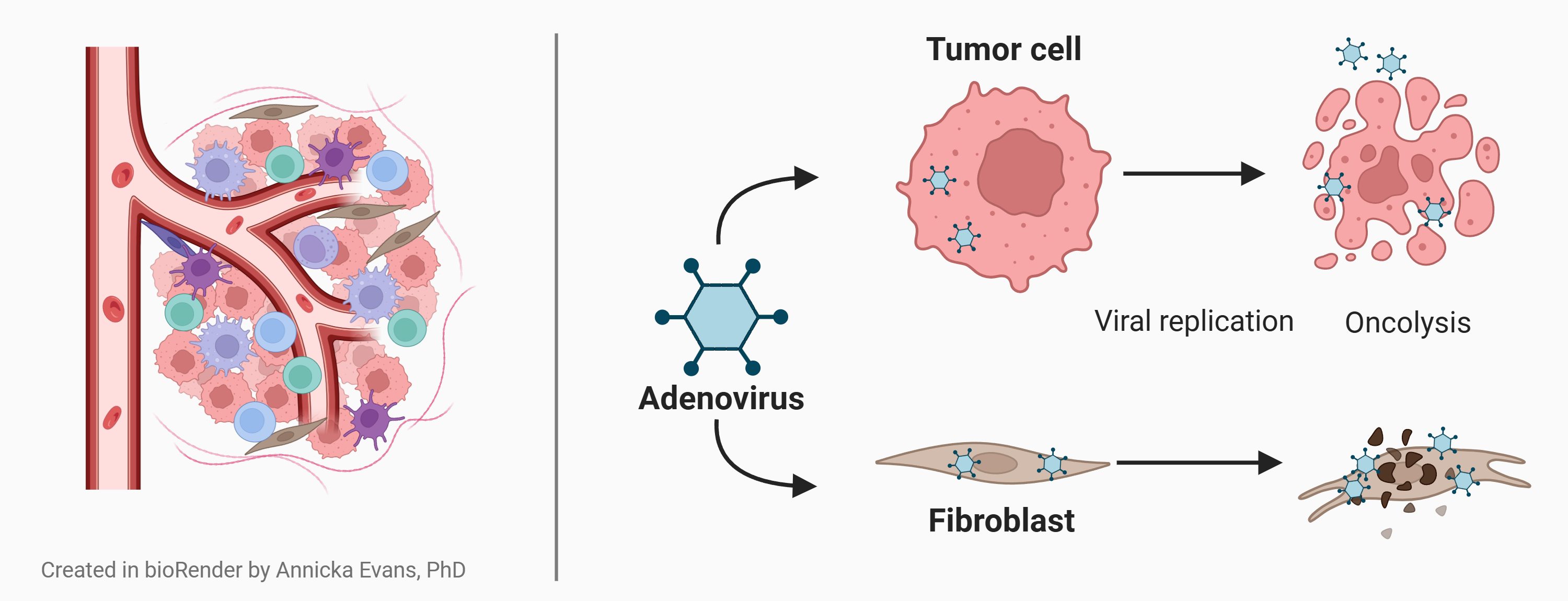
Theolytics (a UK based biotech company) is building a pipeline aimed at killing tumor cells while also weakening the surrounding stroma, the network of cells that can help tumors survive and resist treatment. They are currently testing their oncolytic viral therapy, THEO-260 in two trials: OCTOPOD-IV (intravenously, UK and Spain), and OCTOPOD-IP (intraperitoneally or directly into the abdomen, US), with the latter dosing its first patient this week. Both trials are the first time THEO-260 has been given to patients, so I’ll be watching closely for early safety and efficacy data!
A few more sips: THEO-260 is an oncolytic adenovirus therapy for ovarian cancers that have already shown resistance to platinum-based chemotherapy treatments, serving a particularly vulnerable population. The edge? The virus was selected for its ability to kill both tumor cells and cancer-associated fibroblasts (CAFs), which can play a key role in treatment resistance. This is what may differentiate Theolytic’s approach from other exhausted ones in this target group.
Message me if you have a recent science development you’d like to see featured!
3. Bio[Tech]
The Tea: Roche just got EU approval for its blood plasma Tau test, Elecsys pTau271 — an important step toward making Alzheimer’s screening faster and more accessible.
Today, gold standard Alzheimer’s diagnosis often involves a combination of cognitive assessments, brain imaging (PET and MRI), and invasive cerebrospinal fluid (CSF) tests looking for tau and amyloid-beta biomarkers. But many of these approaches are expensive, time-consuming, or difficult to access, making the time between first symptoms and diagnosis remarkably long.
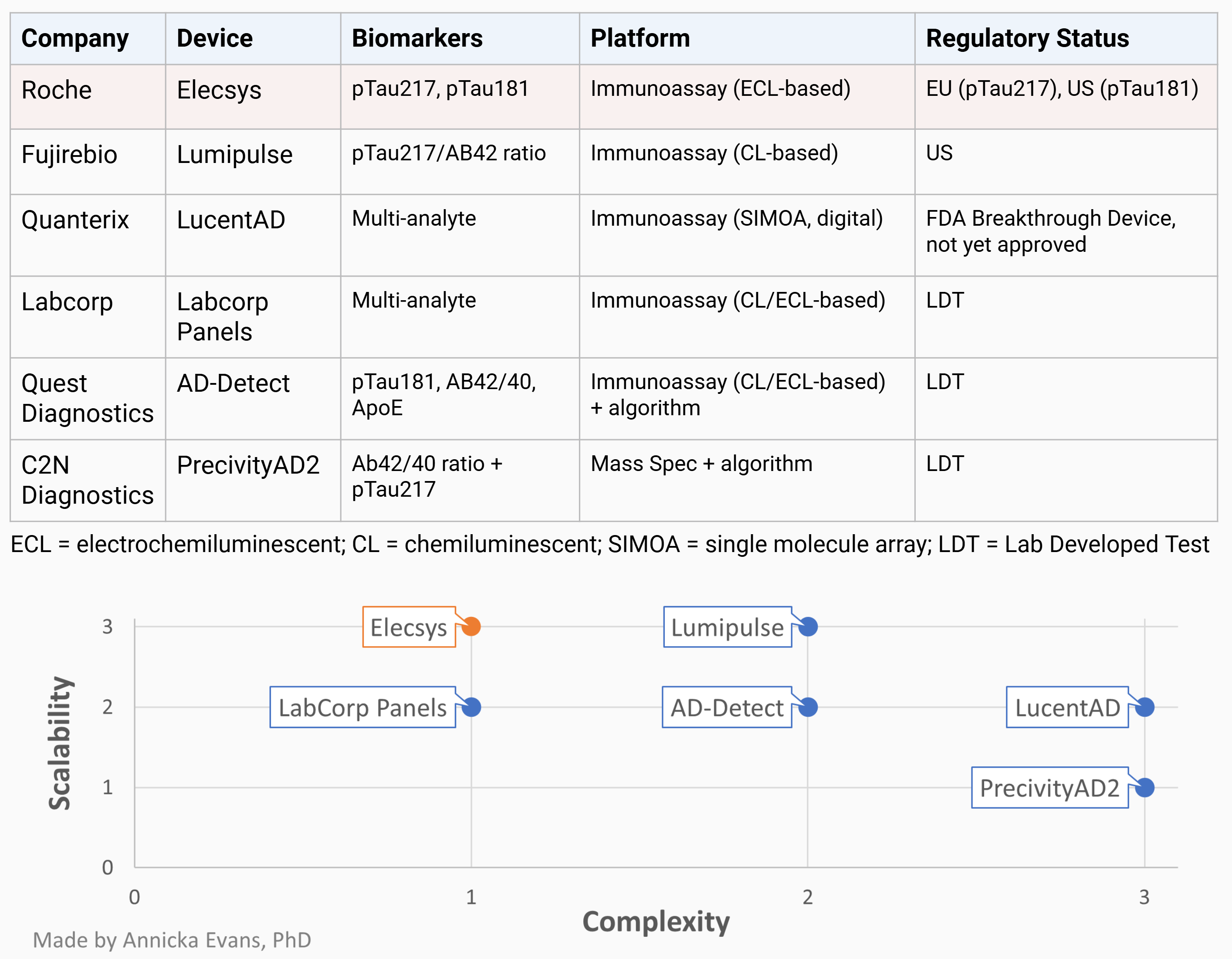
In partnership with Eli Lilly, Roche has now developed two blood-based immunoassays: one for pTau181 (already available in the US) and now a newer assay targeting pTau271, which is thought to be a stronger and more specific Alzheimer’s signal. The Lumipulse device was actually the first blood-based test FDA approved, just last year. This shift toward faster, more scalable diagnosis could significantly improve care by identifying patients earlier in the disease process. Leqembi and Kisunla are two currently approved therapies targeting amyloid pathology, but without improved detection and diagnosis, millions of people are left untreated.
A few more sips: I was inspired to do a broad review of the current Alzheimer’s blood-based diagnostic tests. All but one are immunoassay-based tests (varying versions). Three tests are Lab Developed Tests (LDTs) meaning they can only be performed within certain validated labs or lab systems, unliked FDA approved tests which are themselves validated and can be performed in any lab that has the proper instruments.
Below is a table I made focused on differences in biomarkers tested for, type of platform technology used, and regulatory status. I also took a stab at giving them a complexity and scalability score. Let me know what you think and if this was helpful.
4. The Rulebook
The Tea: This week the FDA announced a pilot program for completing mini facility inspections that will allow the agency to cover more area in shorter time. Since April, they have already completed 46 of these one-day inspections at facilities that AI determined were low-risk based on product type and historical inspection findings. These abridged inspections do not replace full facility inspections and inspectors reserve the right to extend the inspection if there is any indication of an issue. They will continue throughout 2026.
“We are closely analyzing the operational and compliance data from these assessments—including trends in outcomes, risk signals, and investigator feedback to determine how this approach can enhance our broader inspectional strategy,” - FDA Associate Commissioner for Inspections and Investigations, Elizabeth Miller, Pharm.D.
If you’re looking for a longer read on this topic I’d recommend the following:

5. The Human Side
The Tea: Dr. Katrine Wallace, PhD is an expert epidemiologist and seasoned science communicator. In this perspective piece she reflects on how this past week (with the hantavirus outbreak) demonstrated that health and science misinformation now runs with robust infrastructure. The rumors and false claims that took the first years of the COVID-19 pandemic to fully form, now sprout from the dirt in a matter of hours, with the same underlying themes just attached to the latest relevant story.
“The individual claims almost matter less than the cycle itself: See a new disease. Distrust the official explanation. Assume a coverup. Mention ivermectin. Suggest a hidden profit motive. Repeat.” - Dr. Kat Wallace
I think she eloquently highlights that public health experts are now faced with two problems at once: the actual illness, disease, or contagion and the cyclical monetization scheme that churns out misinformation around it.

Biotech Term of the Week
Paid Subscriber Bonus Content
Accelerated Approval Pathway
